Core Web Vitals fix serviceTurn “Core Web Vitals: Failed” into a pass.
I fix LCP, INP and CLS in your code, not with a plugin, and prove it with before and after data.

Done by Parish Khan, senior developer since 2013
Updated
Fixed price
$890
Delivered in 5 business days after payment
- Up to 3 page templates fixed
- LCP, INP and CLS fixed in code, not with a plugin
- Before and after report with real metrics
- Search Console validation started for you
- Follow-up check when field data updates
Measurably faster, or a full refund. No payment until I confirm your brief.
- creators use frontends I built at Artlist and Artgrid
- 10M+
- creators use frontends I built at Artlist and Artgrid
- the year I started shipping for the web
- 2013
- the year I started shipping for the web
- products delivered for clients in 15+ countries
- 50+
- products delivered for clients in 15+ countries
- clients, with a 5-star average on Upwork and Fiverr
- 100+
- clients, with a 5-star average on Upwork and Fiverr
Works with
Next.js
React
WordPress
Shopify
Astro
Webflow
- Static HTML
What changes after delivery
Right now
- PageSpeed Insights says “Core Web Vitals Assessment: Failed”.
- Search Console keeps flagging poor URLs on mobile.
- You installed speed plugins, and the numbers barely moved.
After delivery
- Pages that load fast and stay still on real phones.
- Green field data in PageSpeed Insights and Search Console.
- A clear record of what changed, so it stays fast.
Core Web Vitals checker
Run a live check on Google’s PageSpeed data, or enter the numbers from Search Console, and see what is failing and why.
LCP
Largest Contentful Paint
Good is 2.5 s or less
INP
Interaction to Next Paint
Good is 200 ms or less
CLS
Cumulative Layout Shift
Good is 0.10 or less
You get the real-user values from the last 28 days where Google has them, the issues Google flags on the page, and a plain-English explanation of what to fix first.
Failing, or close to it? I fix LCP, INP and CLS for up to three page templates for a fixed $890.
Everything included for $890
Field and lab audit
Real-user data from Chrome plus Lighthouse and performance traces for each template, so fixes target what visitors actually feel.
LCP fixes
Hero images prioritised and sized, key files preloaded, server response time, render-blocking CSS and JavaScript, and font loading.
INP fixes
Long tasks broken up, heavy scripts deferred or removed, and click and input handlers made cheap.
CLS fixes
Space reserved for images, embeds and banners, fonts that swap without a jump, and no content pushed down after load.
Third-party script control
Tag managers, chat widgets and pixels loaded later or replaced with lighter versions, with the cost of each one shown.
Caching and delivery
Cache headers, compression, and modern image formats like AVIF and WebP, served from a CDN.
Before and after report
Per-template metrics and filmstrips, with what changed and why, so future updates do not undo the work.
Search Console validation
I start “Validate fix” for you, and re-check your field data after Google’s 28-day window has caught up.
Not included
- Redesigns, or rebuilding the site on a new platform.
- Removing third-party tools you rely on. I show the cost of each; you decide.
- Moving hosts. An image CDN is an add-on; a full migration is quoted separately.
- Pages beyond the three templates. Extra templates are an add-on.
- Promised ranking changes. Nobody can honestly guarantee those.
What I need from you
- The URLs of up to three templates, like your home, product and article pages.
- Code access (GitHub or GitLab), or admin access for WordPress or Shopify.
- A staging site, or permission to deploy carefully to production.
- Read access to Google Search Console, to see your field data.
The three Core Web Vitals, and what breaks them
Google looks at the 75th percentile of real visits over 28 days. All three metrics must be good to pass.
LCP
Largest Contentful Paint
How long until the biggest image or text block appears.
Usually caused by
- A slow server response
- A large or lazy-loaded hero image
- Render-blocking CSS, JavaScript or fonts
Fixed by
- Cache pages at the edge
- Prioritise and resize the hero image
- Inline critical CSS, defer the rest
INP
Interaction to Next Paint
How long the page takes to respond visibly to a tap, click or key press.
Usually caused by
- Long JavaScript tasks
- Heavy third-party scripts
- Expensive re-renders on click
Fixed by
- Break up long tasks
- Delay or remove third parties
- Paint first, work after
CLS
Cumulative Layout Shift
How much visible content jumps around while the page is in use.
Usually caused by
- Images and embeds without dimensions
- Banners injected above content
- Web fonts swapping size
Fixed by
- Reserve space for media
- Give late content a fixed slot
- Size-matched font fallbacks
Real Chrome visits
Field data from the Chrome UX Report, not a lab test
75th percentile
Three out of four visits must be good
Rolling 28 days
Improvements show up gradually
All three pass
One poor metric fails the assessment
How delivery works
- Day 0
Order and brief
You order and share your URLs. I confirm the brief and send the invoice. Work starts when payment lands.
- Day 1
Audit
Field data, lab traces, and a ranked list of fixes per template, posted to your portal.
- Days 2 to 4
Fix
Changes shipped to staging first and measured one at a time.
- Day 5
Report
Deployed, with the before and after report and Search Console validation started.
- Day 33
Follow-up
I re-check your field data once Google’s 28-day window reflects the fixes.
Proof, not promises
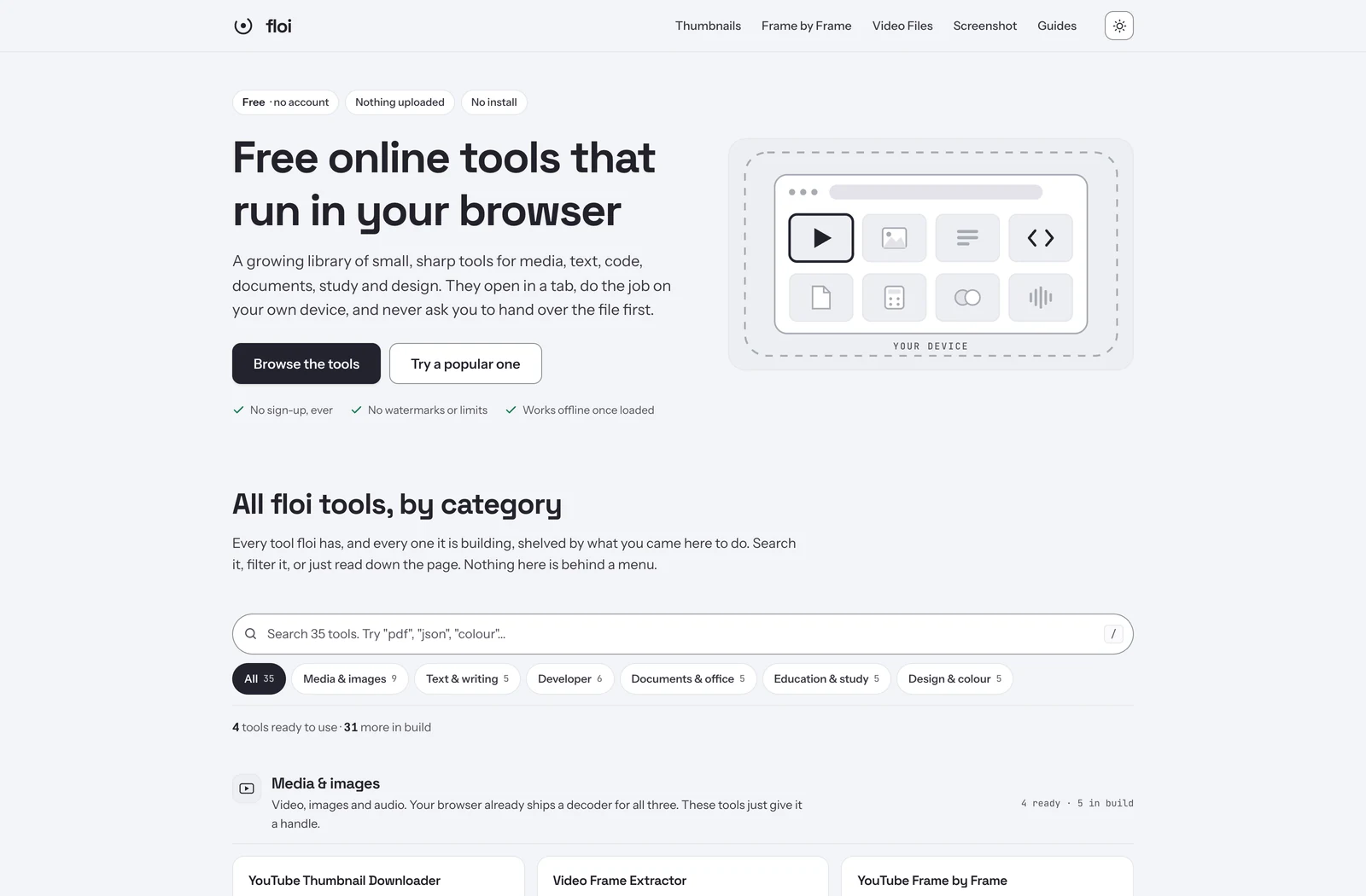
floi
2026A tool library with no server behind it.
- Worker invocations per page load
- 0
- Worker invocations per page load
- In-browser, nothing uploaded
- 100%
- In-browser, nothing uploaded
- Tools shelved across 6 categories
- 35
- Tools shelved across 6 categories
Delivered a complex e-commerce platform 2 weeks ahead of schedule. Clean code, excellent communication, and zero post-launch bugs. Will hire again.
Core Web Vitals fix pricing
One fixed price, agreed before any work starts. Add only what you need.
Core Web Vitals fix
8 things included, delivered in 5 business days
$890
Your fixed price
$890
Delivered in 5 business days after payment.
Order now- Measurably faster, or a full refund. If the templates I work on are not measurably faster in LCP, INP or CLS after my fixes, you get a full refund.
- No payment today. I confirm your brief, then send an invoice you pay by bank transfer in USD, EUR or GBP.
Need ongoing work instead of a one-off job? A monthly plan covers requests like this with no quotes.
The guide, 3 minute read. Updated .
On this page
What are Core Web Vitals?
Core Web Vitals are three measurements Google uses to judge how a page feels to real visitors: how fast the main content appears, how quickly the page reacts to taps and clicks, and how much the layout jumps around while it loads.
| Metric | Measures | Good | Needs improvement | Poor |
|---|---|---|---|---|
| LCP, Largest Contentful Paint | Loading: when the biggest image or text block appears | Up to 2.5 s | 2.5 to 4 s | Over 4 s |
| INP, Interaction to Next Paint | Responsiveness: delay after a tap, click or key press | Up to 200 ms | 200 to 500 ms | Over 500 ms |
| CLS, Cumulative Layout Shift | Visual stability: how much content moves unexpectedly | Up to 0.1 | 0.1 to 0.25 | Over 0.25 |
Google measures them on real Chrome visits, collected in the Chrome UX Report (CrUX). A page passes when the 75th percentile of visits over the last 28 days is good for all three. In other words, three out of four visits have to be fast, not just yours on office Wi-Fi.
What “Core Web Vitals Assessment: Failed” means
The assessment at the top of PageSpeed Insights uses field data: real visits from the last 28 days. It fails if any one of the three metrics is outside the good range at the 75th percentile. The performance score underneath comes from a single lab test on a simulated phone, which is useful for debugging but is not what Google’s ranking systems use.
That is why a page can score 95 in the lab and still fail. Real visitors use slower phones and networks, arrive with cold caches, and click things the lab never touches, which is where INP problems live. If your page does not have enough traffic for its own field data, PageSpeed Insights shows your whole site’s data instead, or nothing at all.
How to fix LCP
- Find the LCP element first. It is usually the hero image or headline. Everything else is secondary.
- Never lazy-load it. Give the LCP image
fetchpriority="high", correct dimensions, and a modern format like AVIF or WebP. - Make it discoverable. If the image is set in CSS or loaded by JavaScript, the browser finds it late. Put it in the HTML, or preload it.
- Cut server response time. Slow TTFB delays everything. Caching full pages at a CDN often halves LCP on its own.
- Remove render-blocking resources. Inline the critical CSS, defer the rest, and load fonts without blocking text.
How to fix INP
- Find the slow interactions. Real-user data shows which clicks are slow. Common culprits: menus, filters, add-to-cart buttons, and forms.
- Break up long tasks. Any JavaScript task over 50 ms blocks the next paint. Split the work and yield to the browser between chunks.
- Update the screen first. Show the visual response immediately, then do analytics, network calls and heavy logic afterwards.
- Audit third parties. Chat widgets, A/B testing tools and tag managers often run expensive code on every click.
- Reduce hydration cost. On React and Next.js sites, less client-side JavaScript means a faster main thread.
How to fix CLS
- Reserve space for media. Set width and height, or an aspect ratio, on every image, video and embed.
- Reserve space for late content. Cookie banners, promo bars and ads should have a fixed slot, or overlay the page instead of pushing it down.
- Stop font swaps from jumping. Preload the main font and use a size-matched fallback so text does not reflow when it loads.
- Animate with transforms. Moving elements with
transformnever shifts layout. Changingtop,heightormargindoes.
Quick self-check
Load your page on a phone with throttled network in Chrome DevTools, and try to tap a button while it loads. If the button moves under your finger, that is CLS. If the tap takes a beat to respond, that is INP.
Do Core Web Vitals affect SEO and sales?
Google says Core Web Vitals are used by its ranking systems, and also that great, relevant content matters more. In practice they act as a tie-breaker between similar pages, and they matter most on competitive queries where everyone’s content is good.
The bigger payoff is usually conversions. In the Deloitte study “Milliseconds Make Millions”, commissioned by Google, a 0.1 second faster mobile site lifted retail conversions by 8.4% and travel conversions by 10.1%. Faster pages are cheaper to advertise, too, because landing page experience feeds into Google Ads Quality Score.
How long until Google shows the improvement?
Lab scores improve the moment fixes go live. Field data takes longer, because it is a 28-day rolling window: it shifts gradually as new, faster visits replace old ones. Search Console’s “Validate fix” process monitors for about 28 days too. That is why this service includes a follow-up check a month after delivery.
Core Web Vitals fix FAQ
Often ordered with
Make your Lovable, Bolt or Cursor app production-ready
A security audit and fix sprint for AI-built apps: database rules, exposed keys, authorization, abuse limits, monitoring and backups.
Works with Lovable, Bolt, v0 and 6 more
$1,290
Fixed price, 5 business days
Add an AI chatbot trained on your content
A branded chat widget that answers from your own pages and documents, cites its sources, and hands off to you when it is unsure.
Works with Any website, WordPress, Webflow and 6 more
$1,490
Fixed price, 7 business days
Add Stripe Checkout to your website
Cards, Apple Pay and Google Pay on your site, with verified webhooks so every paid order is recorded and fulfilled.
Works with Next.js, React, Node.js and 4 more
$690
Fixed price, 3 business days
Planning something bigger? Web Performance Optimization, Website Speed Optimization and Technical SEO are quoted as custom builds.
Ready when you are.
Core Web Vitals fix for a fixed $890. Ordering takes two minutes, and there is no payment until I have confirmed your brief.
You work with me directly, on a monthly plan or a fixed-price project. No agency layer, one person accountable for the build.